In Part One, we told the story of what burned — and what it took sixty years to build. In Part Two, we traced the failure from family to school to the institutions downstream, and asked what conduct disorder, disinhibition, and a lack of formation have to do with what happened. In this final part, we turn to the question that follows naturally from everything before it: what happens to a child after the fire? What do we owe them, and who decides?
What a Child Carries Into a Dormitory at Four in the Morning
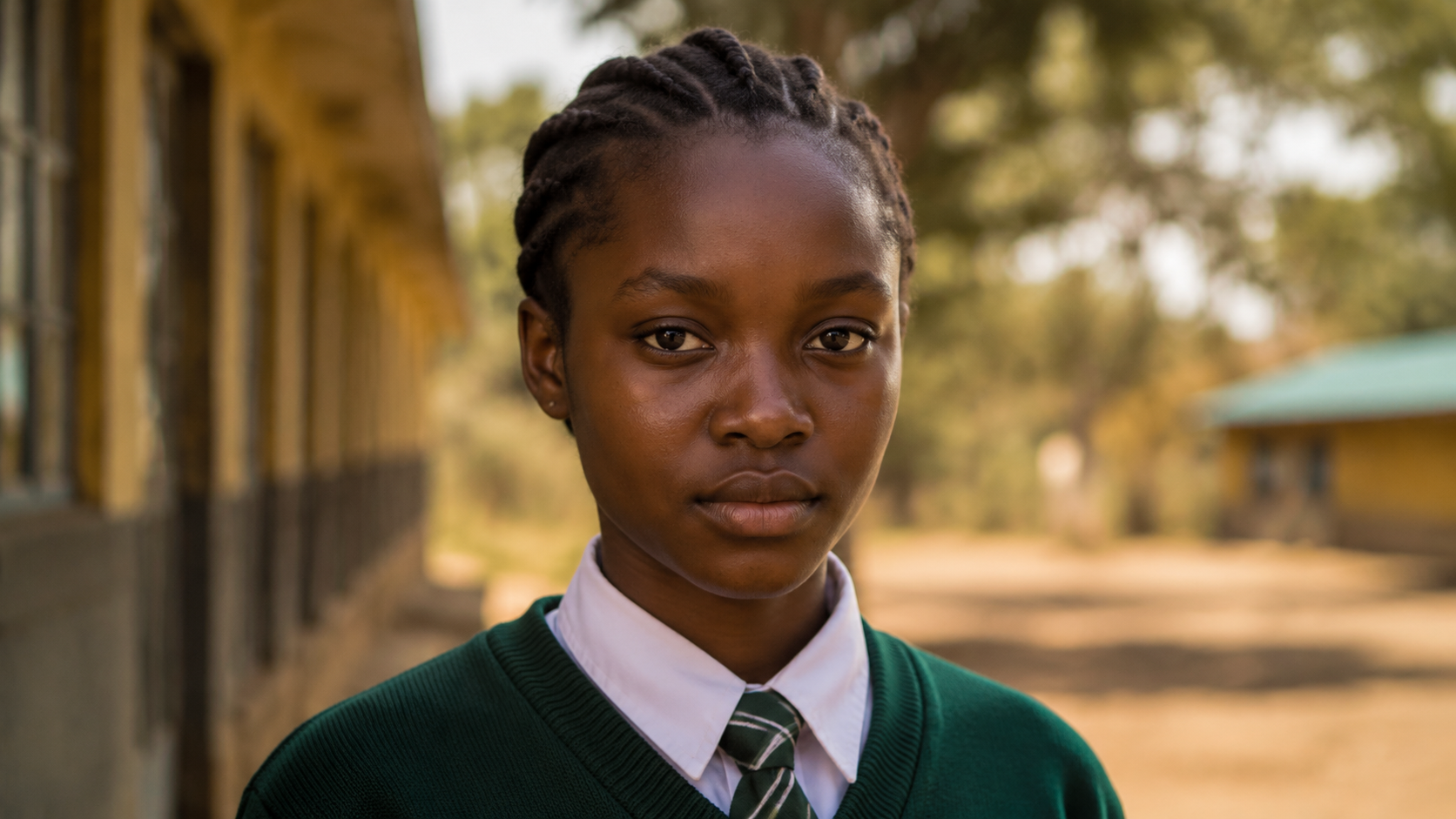
A phone call stays with me. It was made to someone I know, after the wave of school closures began — not a parent of an Utumishi student, but someone asked, during one of the strikes, to bring a child home. Not their own child. A neighbour’s, because the parent was too far away to collect her in time. They drove to the school, picked up a girl they barely knew, and on the way home asked her the obvious question. What’s actually going on at your school?
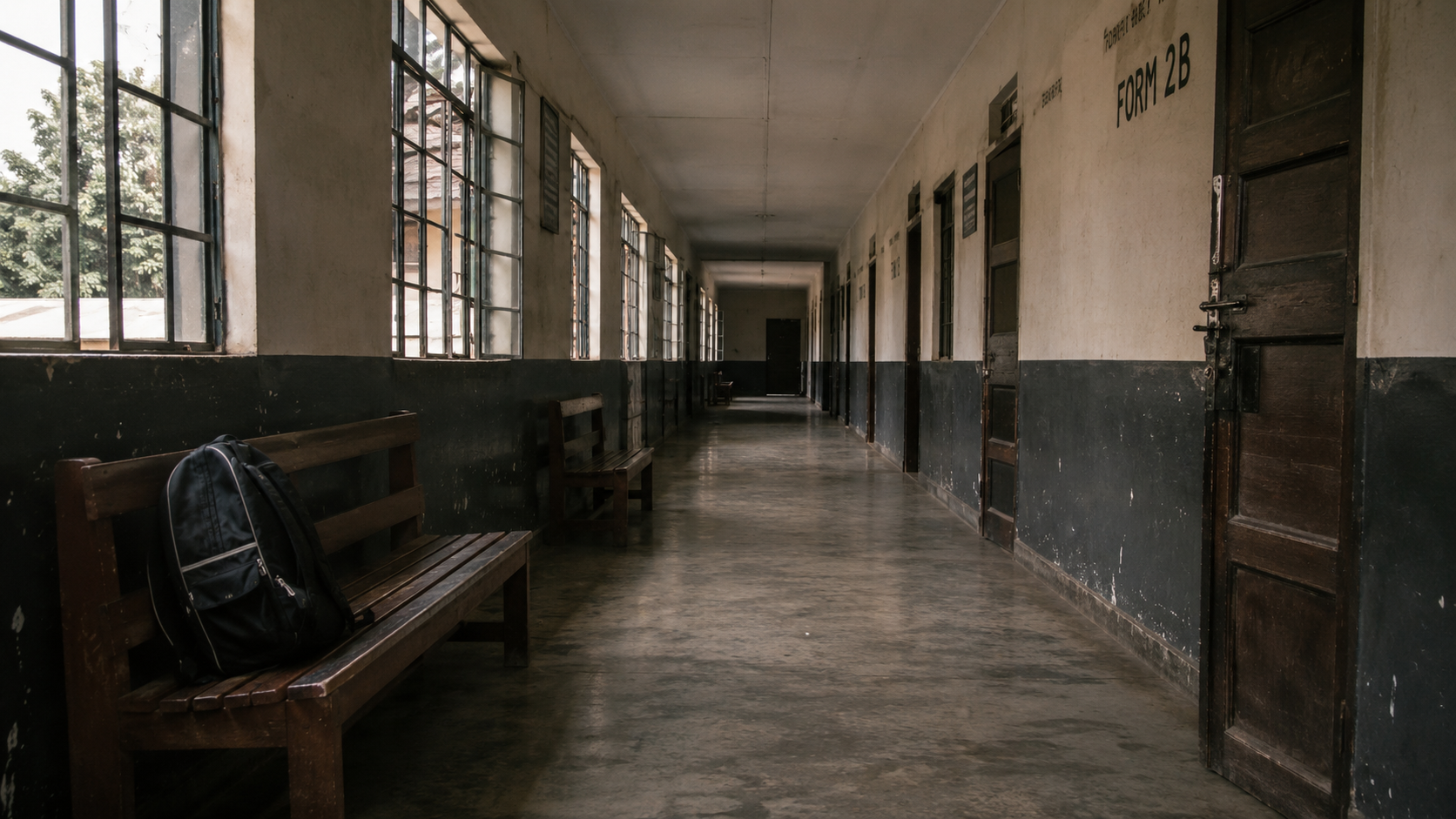
What the girl told them was not dramatic. It was logistical. Their dormitories are packed — too many students for the space, sleeping like sardines, competing for showers, lockers, even the air in the room. They sleep at ten because of evening preps and duties. They wake at four to begin the same duties again. There is almost no real sleep in between. And underneath all of it sits a number nobody asked the children about: the decision, several years ago now, to move Kenya toward one hundred percent transition from primary to secondary school — a genuinely good policy, a genuinely necessary one — that arrived in schools whose dormitories, dining halls, and staff numbers were never expanded to match it.
Nobody lit a match because of overcrowding. But overcrowding does something quieter and, in its own way, just as dangerous. A child who is never alone, never has space to simply breathe, never has a quiet corner to sit with a difficult feeling before reacting to it — that child is not learning to tolerate frustration. They are learning to survive it, which is a very different skill. Frustration tolerance is built in small, repeated moments of discomfort that a person learns to sit through without exploding. Strip away the physical and emotional space for that to happen — pack a hundred exhausted teenagers into a dormitory built for sixty, on five hours of broken sleep — and you remove the very conditions in which self-regulation is practised.
This is not an excuse for what happened. It is context that belongs inside the conversation about consequences — because the conversation that follows depends on understanding it.
What I Saw in a Courtroom — and What Is Happening in One Right Now
I want to tell you about something I witnessed myself, years ago, in 2015 or 2016. I will not say too much about the matter that took me to court that day; it was not mine to disclose then and it is not entirely mine to disclose now. But while I was there, waiting for my own business, I watched something I have never been able to fully put down.
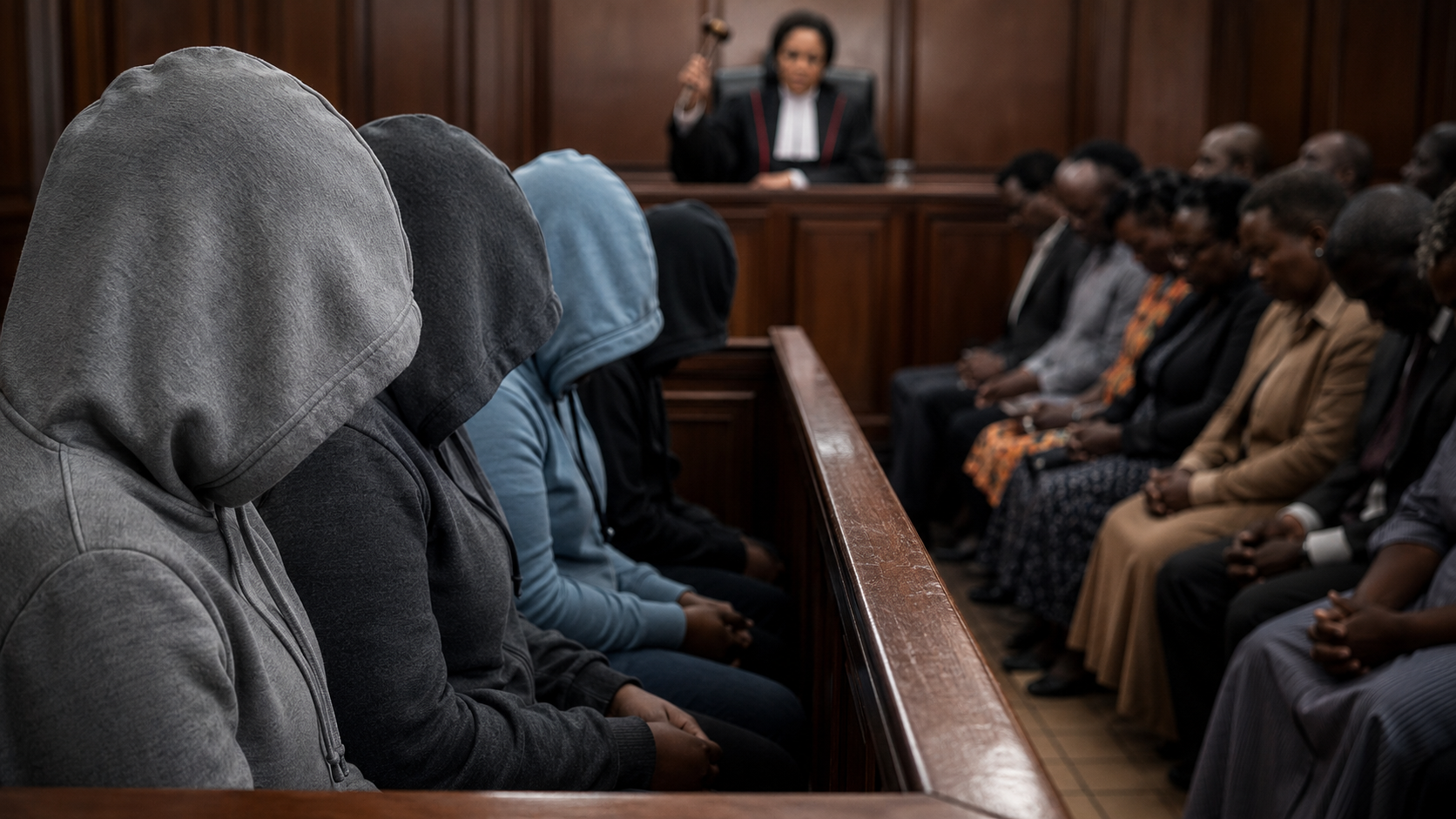
A group of children — girls and boys, fourteen, fifteen, sixteen years old — were marched into the courtroom in single file. They were handcuffed to each other, child to child, down the line. I remember looking at their faces as they walked past, looking for something. Fear. Regret. Anything. There was none of it that I could see. They were being charged with killing a neighbour’s son.
Later that same day, a different group came through. Much younger — nine and ten years old. They had found the casing of a spent gun and packed it with mud to give it weight, so that when they pressed it against someone’s back in the dark, it felt like the real thing. They had used it to rob people.
I have carried both of those images for almost a decade now. Not because I think those children were monsters. The opposite. Because I kept asking myself a question I am only now able to put into words clearly: what happened, in each of their lives, before that day? And what was supposed to happen, that did not?
I am telling you this now because it is no longer a memory. It is happening again, this month, to the girls of Utumishi.
On June 23, 2026, the Office of the Director of Public Prosecutions approved murder charges against the students implicated in the fire — sixteen counts, one for each girl who died. Of the nine original suspects, one was released after investigators concluded she was not culpable. The remaining eight were arraigned on June 26 to formally take plea on the murder charges. A Nairobi court has since ordered that all eight minors undergo a mental assessment by a child psychiatrist at Mathare Mental Hospital, appointed pro bono advocates for each of them, directed that protection and care files be opened, and ordered an assessment by a Children’s Officer. They remain remanded at Kabete Children’s Home while the case proceeds. The matter returns to court on July 1, 2026.
Read that sequence again. Murder charges. Mental assessment. Pro bono advocates. Protection and care files. A children’s remand home, not an adult prison. The system, to its credit, appears to be trying to hold two truths at once — that what happened deserves the full weight of the law, and that the people who did it are still, legally and developmentally, children.
That is exactly the tension I could not resolve a decade ago, watching those handcuffed children walk into a courtroom with no expression on their faces. I still cannot fully resolve it. But I now believe the absence of expression I saw that day was not the absence of feeling. It was very likely the presence of more than a child’s nervous system knew how to process, with nowhere left for it to go. That is the question Utumishi has forced back to the surface for an entire country, in real time, this month — not as memory, but as eight specific girls whose names most of us will probably never know, facing a court system that is, for once, trying to ask the harder question alongside the obvious one.
A Father Who Chose Accountability Over Protection
There is a man in Kenya right now who is living out, in real time, the exact question this series has been circling.
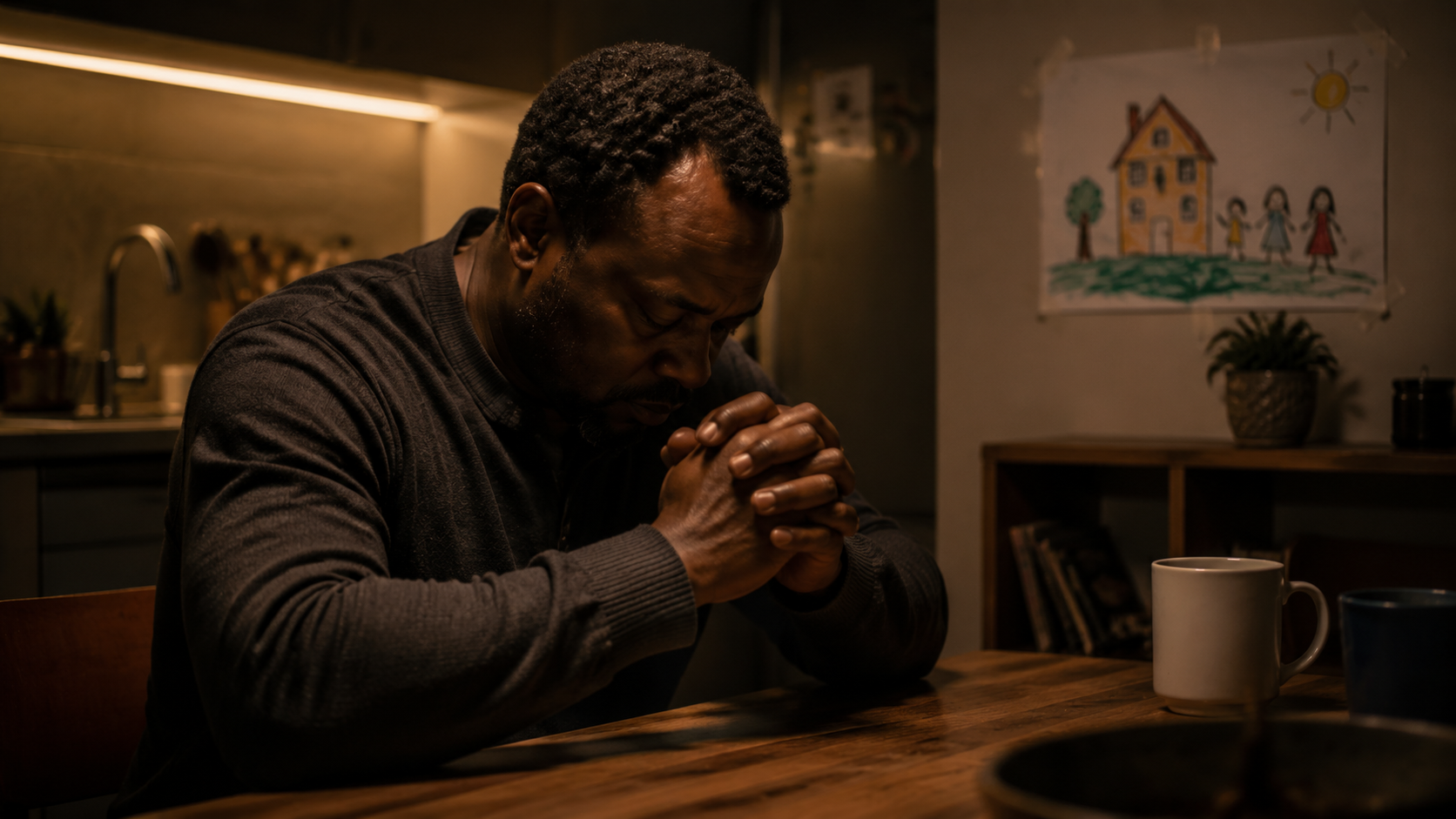
His name is Wafula Buke — a former student leader at the University of Nairobi, jailed under President Moi for five years, a man whose own youth was spent in detention at Nyayo House for standing against injustice. In February, his 21-year-old son Declan was sentenced to four years in prison for preparing to commit a felony. Buke did not hide from it, and he did not soften it for public consumption. He posted, plainly: Considering how I have known him, he badly needed to go to jail. I thought he needed seven years for full rehabilitation, but the magistrate gave him less.
What most people did not know when that post went viral is how far back the pattern went — and how close it sits to everything this series has been naming. When Declan was in Form One, Buke says he was accused of leading the burning of a dormitory at his school in Bungoma. Buke told the headmaster to call the police, because the boy was endangering the other students. The headmaster chose seventy strokes of the cane instead. The boy promised to change. The following term, he burned another dormitory. He was expelled.
When his mother later found a new boarding school willing to take him, Buke refused to let him go. That fella cannot live with other students, he told her. I cannot allow that. He pushed instead for the law to take its course.
And in the same breath, Buke did something most parents in his position never do publicly. He named his own failure too. He is not entirely responsible for his predicament, Buke wrote. Single parenthood messed him a bit. The other challenge was the missing father pursuing other objectives.
A father who chose accountability over protection — and who, in the same post, took responsibility for his own absence. Both things, held at once. That combination is rare. And it is, I think, exactly the posture this entire series has been trying to describe.
What Kind of Consequence Is Actually Just?
None of this is really about whether children should face consequences. They should. Buke is right about that, and so is every instinct in any parent who has ever had to discipline a child they love. The eight girls now facing sixteen counts of murder each are not facing a hypothetical reckoning — they are facing the most serious charge the law allows, and the families of the sixteen girls who died deserve nothing less than a full and honest accounting of what happened.
The harder question is what kind of consequence is actually just, given what we now understand about the adolescent brain. The frontal lobe — the part responsible for impulse control, weighing long-term consequences, and exercising mature judgment — does not finish developing until roughly the age of twenty-five. That is not an excuse. A fourteen-year-old who sets fire to a dormitory full of sleeping girls is still responsible for that act, and the people harmed by it deserve real justice, not platitudes. But it does mean we are, quite literally, sentencing children for failures of a brain structure that is not yet finished being built. That should shape what we believe punishment is for.
This is where restorative justice enters the conversation — not as a soft alternative to accountability, but as a different theory of what accountability is supposed to accomplish.
Restorative justice asks a different set of questions than the traditional system does. The traditional question is: what law was broken, and what punishment fits the crime? The restorative question is: who was harmed, what do they need, and whose obligation is it to repair that harm? It brings the offender face to face with the people they hurt — not to humiliate them, but so that the harm becomes real instead of abstract. It asks the young person to actively participate in making things right, rather than simply serving time and waiting to be released unchanged. And it holds the surrounding community — family, school, neighbourhood — accountable too, because no child arrives at arson or violence without a context that failed to catch them earlier.
Properly done, restorative justice does not let a child off easily. It can be harder than a prison sentence, because it requires the child to actually face what they did, rather than simply disappearing behind a wall for a fixed number of years and re-emerging unformed.
Kenya does have restorative and diversion frameworks for children in conflict with the law — but they remain underused, underfunded, and largely unknown to the public, overshadowed by a justice system still built primarily around punishment.
The Question Underneath Everything
This is the question Utumishi has actually been asking us, underneath everything else.
Not only what kind of formation produces a child capable of setting a dormitory alight. But what we owe that child afterward — assuming, as developmental science insists we must, that a fourteen-year-old is not a finished person, and that the door to becoming someone different is not yet closed.
Whose responsibility is that — the family who may have failed first, the school that may have failed second, the state that must respond, or all of us together? No single institution can answer that alone. That is the whole point of this entire series. Family, school, faith community, state — each one a link in a chain, and each one capable of catching what the one before it missed, if we build the structures to let them.
This series began with a fire. It closes with a question that does not have a tidy answer: what does it mean to hold a child fully accountable for what they did, while still believing, as a society, that who they become is not yet decided?
That question is worth sitting with for a long time. Longer than three essays. Longer, probably, than any of us will live to see fully answered. But it is the right question, and it is ours to keep asking.
This is Part Three of a three-part series on Utumishi, family formation, and the children we are raising. Part One: Utumishi: A Dream Sixty Years in the Making. Part Two: Utumishi: When the Family Fails, Everything Fails.
Sources: Daily Nation, Radio47, The County Digest
About the Author
Njeri Kiereini
Njeri Kiereini is a social systems thinker, mental health advocate, researcher, and coach whose work sits at the intersection of emotional wellbeing, effective parenting, family systems, and social transformation. She is the Founder of the United Women’s Council (UWC) — a platform built on the conviction that a whole woman makes a whole family, and a whole family makes a whole community. Drawing on experience across advocacy, community development, financial services, and leadership, Njeri works with individuals, families, and institutions to understand the deeper patterns that shape human behaviour and societal outcomes. She is the convener of the Parenting Through the Milestones Summit, which in 2026 brought together over 150 parents across four sessions to ask the hardest questions about raising children in modern Kenya. She is currently pursuing a Master’s degree in Social Transformation and is a frequent speaker and facilitator on emotional wellness, parenting, relationships, leadership, and social change.
Whole Woman. Whole Life. Strength and Grace.