This is not simply a commentary on the Utumishi fire. It is a broader conversation about our children — sparked by that tragedy, but reaching further. It is also, in a way that could not have been planned, a story about serendipity.
In May 2026, the United Women’s Council convened its Parenting Through the Milestones Summit. Over 150 parents gathered across four weeks of sessions, each one asking a different and necessary question about the children we are raising in Kenya today. Raising boys in an anxious and fragmented world. Raising girls in a world that ranks them. Positive role modelling for children living with disabilities. And raising children who experience the world differently — neurodivergence in children. Four sessions. One underlying question: what does it actually take to form a whole human being in this moment?
Those conversations were already underway when the dormitory at Utumishi burned. And what struck us, in the days that followed, was how much the two things were talking to each other. The questions the summit was asking and the questions the fire was forcing were not different questions. They were the same question, arriving from opposite directions.
That convergence is what this series is trying to honour. Not as analysis from the outside, but as reflection from within — from people who are in the middle of this work, asking these questions not academically but personally.
What follows is that conversation.
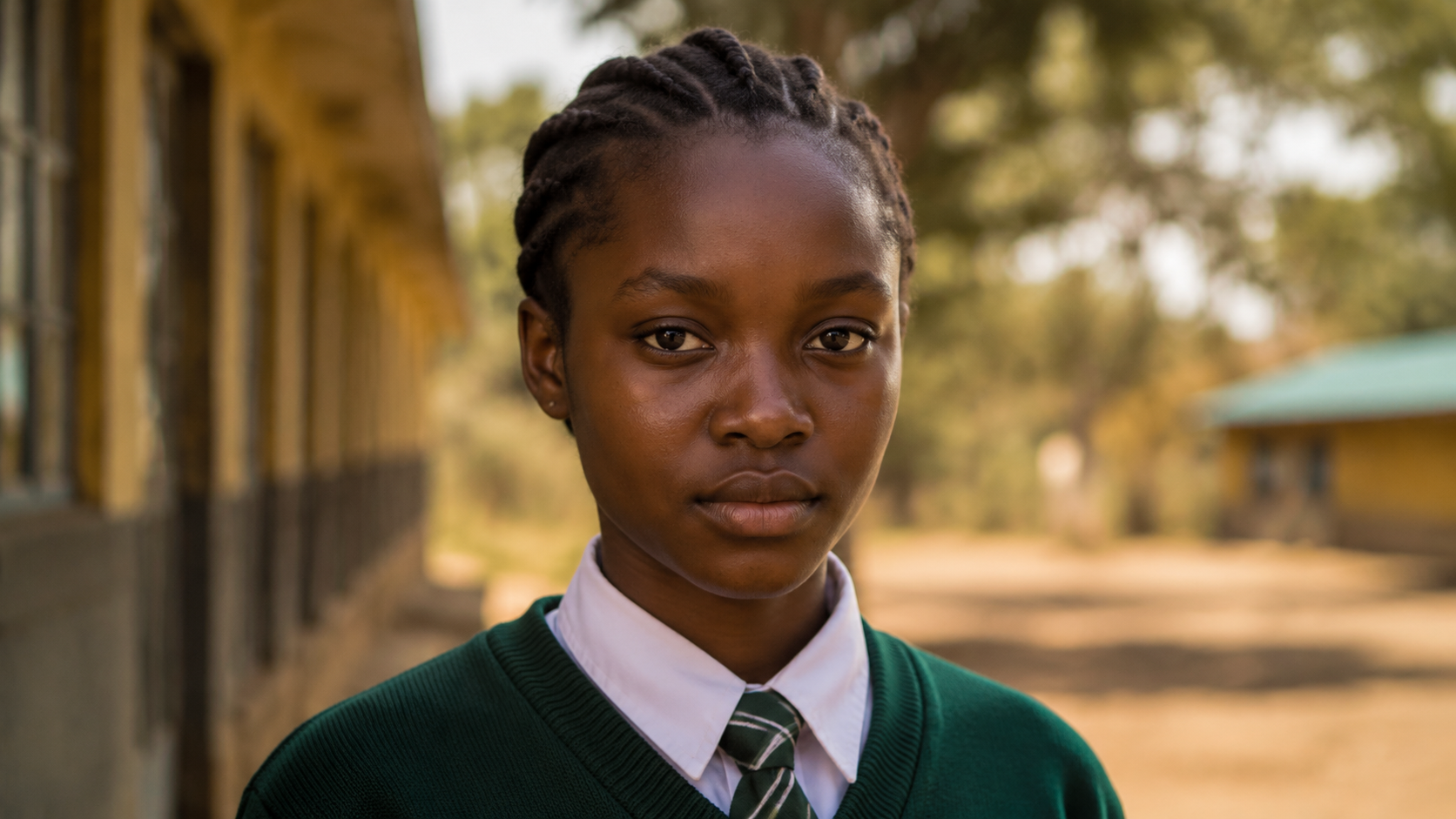
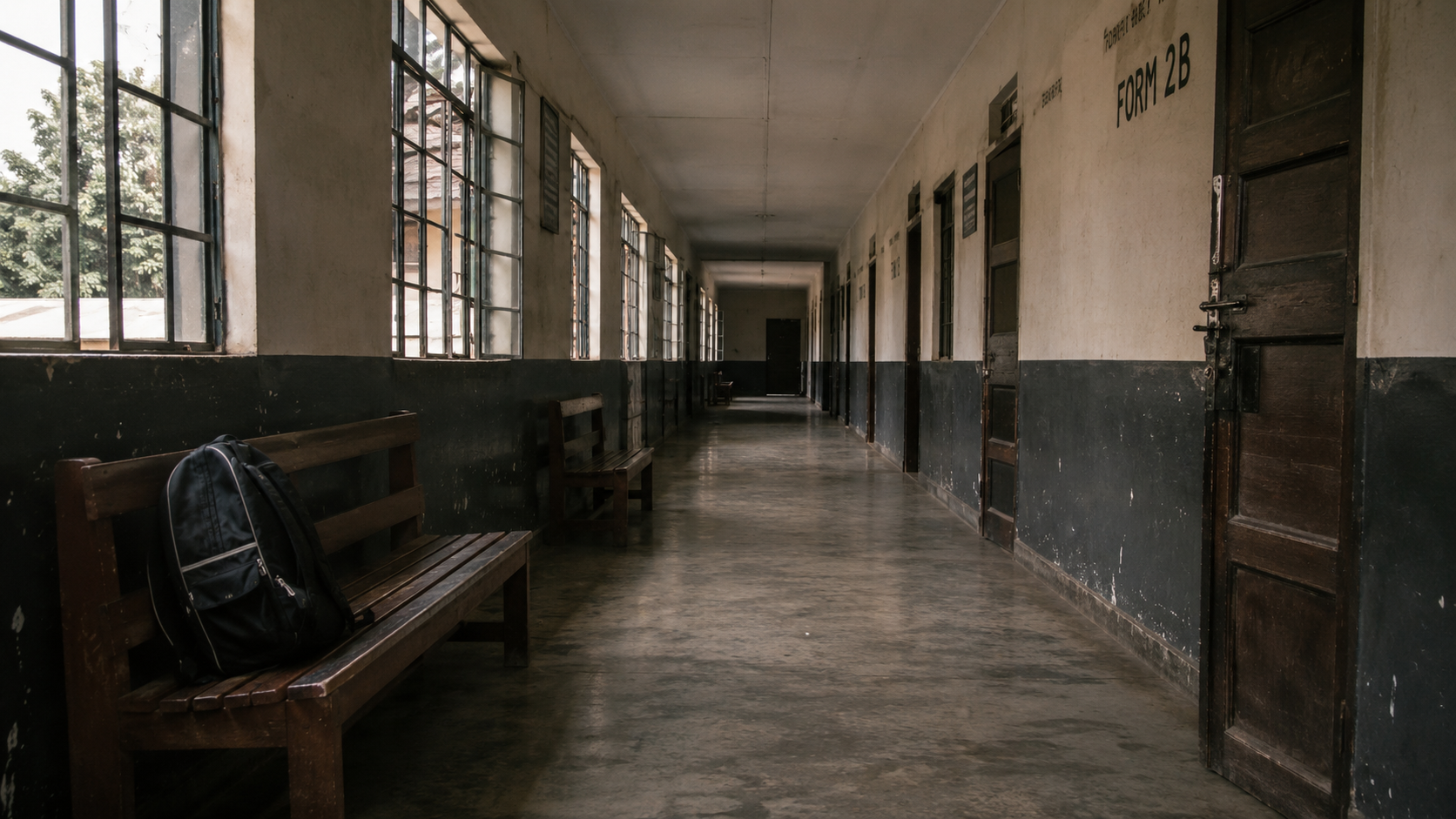
On the morning of May 28, 2026, a dormitory at Utumishi Girls Academy in Gilgil caught fire while students slept. Sixteen girls died. Seventy-nine were injured. Some jumped from windows. Some never made it out.
By the following day, eight students had been arrested on suspicion of arson. Investigators say CCTV footage captured the moment the mattresses were set alight — deliberately, while their peers lay sleeping. The reported motive: frustration over an administrative decision to move examination dates forward by two weeks.
What followed Utumishi was not silence. It was contagion.
Within days, schools across the country began to fall. At least fifteen institutions in Trans Nzoia, Nakuru, Bomet, Kericho, Narok, Kisii and Nyamira counties were closed indefinitely or sent learners home following fires, suspected arson attacks, strikes and fears of planned unrest. On the night of May 30 — just two days after Utumishi — a girls’ dormitory caught fire at St. Paul Githakwa Secondary School in Nyeri at 2 a.m., with four learners arrested. That same night, a Form Two dormitory burned at St. Joseph’s Seminary Senior School in Molo. Kakamega High School closed after a dormitory fire. St Teresa’s Bikeke Girls High School in Trans Nzoia was shut down before anything happened — on the basis of intelligence reports that students were planning a strike.
The Ministry of Education deployed hundreds of additional inspectors and ordered emergency Board of Management meetings across the country. Security chiefs convened crisis meetings. The Kenya Secondary Schools Heads Association called for students linked to unrest to be transferred out of boarding schools entirely.
This is not a Utumishi story. This is a national story, and Utumishi was simply the moment it became impossible to look away.
Kenya has been here before. In 2024, twenty-one boys died in a dormitory fire at Hillside Endarasha Academy in Nyeri. In 2001, sixty-seven boys were killed at Kyanguli Secondary School in what investigators confirmed was arson. In 2020 alone, the Ministry of Education recorded 126 incidents of school arson between January and November. A 2024 safety assessment found dormitories across the country with barred windows, single exits, inward-opening doors, and dangerous overcrowding — and ordered the closure of 348 schools on safety grounds. After each tragedy, the same ritual unfolds: officials arrive, cameras roll, condolences are issued, investigations are announced, and task forces are formed. Then the news cycle moves on, and the reports join their predecessors on shelves.
We are very good at mourning in Kenya. We are less practiced at honest reckoning.
A School Sixty Years in the Making
Before anything else, the nature of this institution deserves to be understood — because it is more interesting, and more poignant, than most coverage has suggested. To understand what burned on the morning of May 28, you need to know what was built, and how long it took to build it.
The dream of a school for police officers’ children was first conceived in the early 1960s. Kenya was newly independent. The National Police Service was finding its footing. Someone, somewhere in those early years of the republic, had the idea that the men and women being asked to hold the country together deserved something for their children — a school of their own, a place of stability and excellence. The idea was noted. And then it sat. For nearly thirty years, it existed only as a vision — passed from one administration to the next, never quite becoming real.
It was not until 1991 that the then Commissioner of Police, the late Philip Kilonzo, finally decided to act. On May 30 of that year, he convened the first steering committee, chaired by former Senior Deputy Commissioner of Police Elijah Sumbeiywo. The school had no buildings yet. No campus. No infrastructure. On December 30, 1992, the first principal, Willie Mugoh, was posted — followed by twelve teachers. And on January 26, 1993, eighty boys and girls walked through the gates of what would become one of Kenya’s finest national institutions.
They slept in timber structures borrowed from the Anti-Stock Theft Unit Police lines. They ate in a makeshift dining hall. The main complex was still under construction. But the dream that had waited thirty years had finally become something you could walk into.
That school was Utumishi Boys Academy. Its motto: the same one the girls’ school would later carry. Greatness in Humility.
The girls’ school — Utumishi Girls Academy — came thirty years later still, founded by former Deputy Inspector General Edward Njoroge Mbugua and officially opened on July 15, 2021, on the same Gilgil campus as its sibling institution. It is not a police school in any exclusive sense. Its admissions are open to students from across Kenya, with a portion of places reserved for children of police officers. By 2025, it had achieved a university transition rate of 96.7 percent — among the highest in the country.
A dormitory in that school was named after the founder’s own daughter — Meline Waithera — who died after being struck by a vehicle on Tom Mboya Street in Nairobi. A father who lost a child built something. Named part of it after her.
Sixty years from dream to reality. One of Kenya’s top-performing national schools. A 96.7 percent university transition rate. A dormitory named after a dead daughter. And on the morning of May 28, 2026, that dormitory burned. Sixteen girls died inside it.
We do not need editorial comment for that sequence of facts to carry weight. The arc speaks for itself. The question it raises — about what we build, what we lose, and what we fail to protect — is the question this series is trying to answer.
The People Protecting Us Are Not Okay
The data on Kenya’s police officers is not comfortable reading.
According to the National Police Service Commission, at least 12,000 officers currently suffer from work-related mental health issues. National estimates from research published in 2024 and 2025 put the figure as high as 20,000 officers living with psychological disorders. An average of thirteen murders and eleven suicides are recorded annually within police ranks.
In September 2024, then-Police Spokesperson Dr. Resila Onyango — the first female police officer in Kenya’s history to earn a doctorate, a PhD in Criminal Justice from John Jay College of Criminal Justice at the City University of New York, one of the world’s foremost criminal justice institutions — stated publicly in an interview with Capital FM that mental health issues affect officers at disproportionately higher rates than the general population. She was specific: even officers doing administrative work, sitting at reporting desks, are constantly exposed to traumatic situations. “As police officers, we see a lot,” she said. “Even that police officer who is at the report office — don’t assume they are not going through a lot. They are hearing the stories, people coming to report very horrific incidences of crime.” She acknowledged that the NPS does not have enough counsellors to meet the scale of need. Dr. Onyango has since been appointed Commandant of the Diplomatic Police Unit.
ICJ Kenya has documented a rise in police suicides and attacks by officers on colleagues and family members, directly linked to unaddressed trauma accumulated in the line of duty.
These are not abstract statistics. They describe the internal world that many Kenyan police officers carry home every evening — to families, to children, to dinner tables.
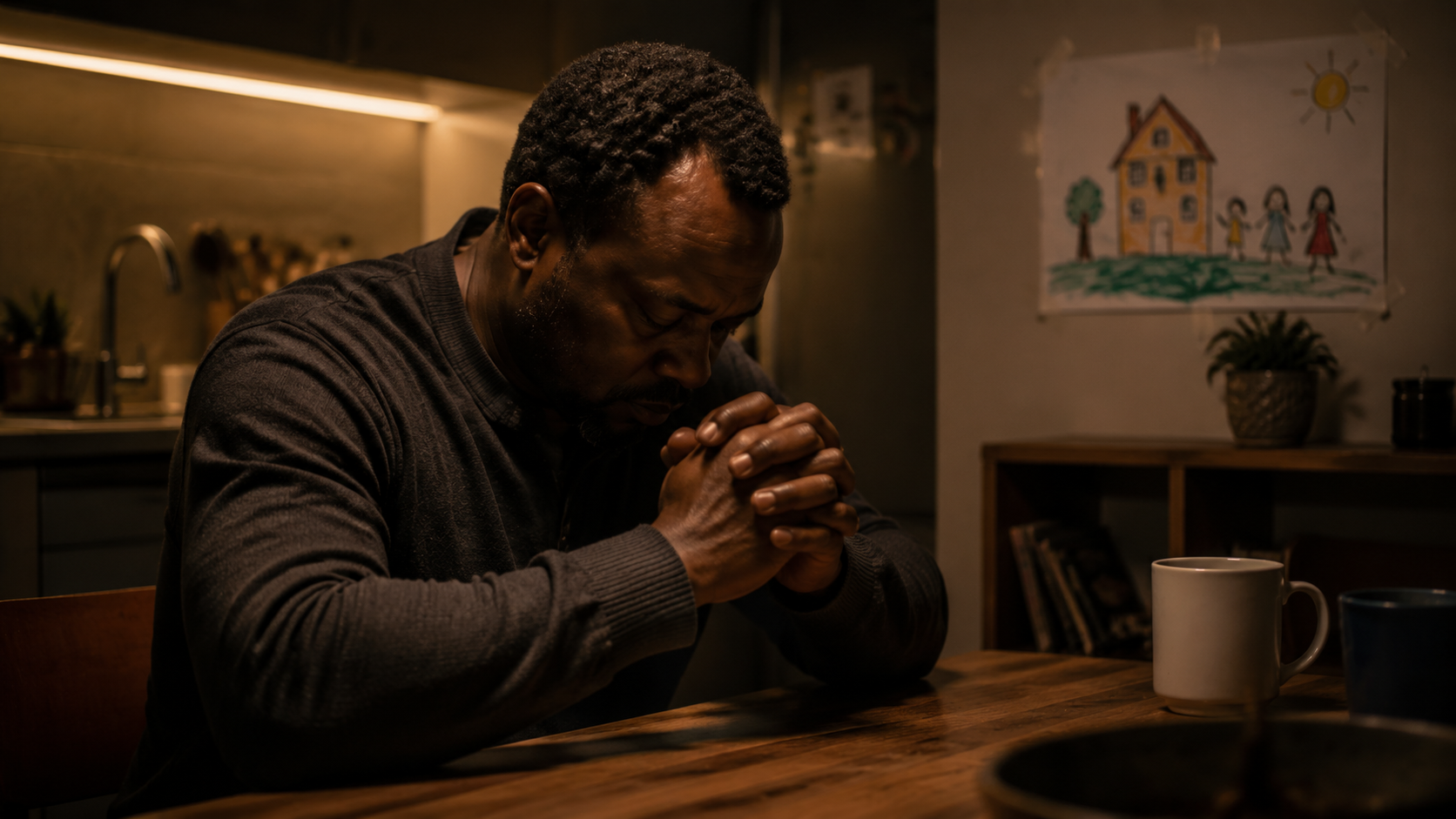
Stress does not clock out at the gate. It travels home. It sits at the dinner table. It lives in the silences between parents.
What Children Carry
We speak often about what children need: good schools, nutritious food, quality teachers, safe environments. These things matter. But there is something that matters even more, and it is harder to measure: the emotional availability of the adults who are raising them.
What happens when a parent comes home from a shift that involved violence, death, or public humiliation? What happens in a marriage where both partners are carrying the weight of a demanding, traumatic profession? What happens when exhaustion becomes the dominant atmosphere of a household?
Children do not need perfect parents. They need present ones — adults who are emotionally available enough to provide consistent warmth, to set clear boundaries, to model self-regulation, to hold firm on consequences. When parents are depleted — not because they are bad people, but because institutions have emptied them — that scaffolding weakens.
We are not asking enough about what police families need in order to function well. We are certainly not funding those answers.
Part Two — Utumishi: When the Family Fails, Everything Fails — publishes next week.
Sources: Al Jazeera, Capital FM, The Standard, ICJ Kenya, National Police Service Commission, Citizen Digital
About the Author
Njeri Kiereini
Njeri Kiereini is a social systems thinker, mental health advocate, researcher, and coach whose work sits at the intersection of emotional wellbeing, effective parenting, family systems, and social transformation. She is the Founder of the United Women’s Council (UWC) — a platform built on the conviction that a whole woman makes a whole family, and a whole family makes a whole community. Drawing on experience across advocacy, community development, financial services, and leadership, Njeri works with individuals, families, and institutions to understand the deeper patterns that shape human behaviour and societal outcomes. She is the convener of the Parenting Through the Milestones Summit, which in 2026 brought together over 150 parents across four sessions to ask the hardest questions about raising children in modern Kenya. She is currently pursuing a Master’s degree in Social Transformation and is a frequent speaker and facilitator on emotional wellness, parenting, relationships, leadership, and social change.
Whole Woman. Whole Life. Strength and Grace.